The 2025 Cambridge Folk Festival was cancelled due to falling ticket sales and the “sky high” costs of running a festival after the combined effect of COVID, Brexit, and the war in Ukraine, according to those running the event.
In January, the festival announced it would return in 2026 and “invest our resources into the long-term planning” of the festival. Soon after, national media reported that the festival had lost £320,000 in 2024.
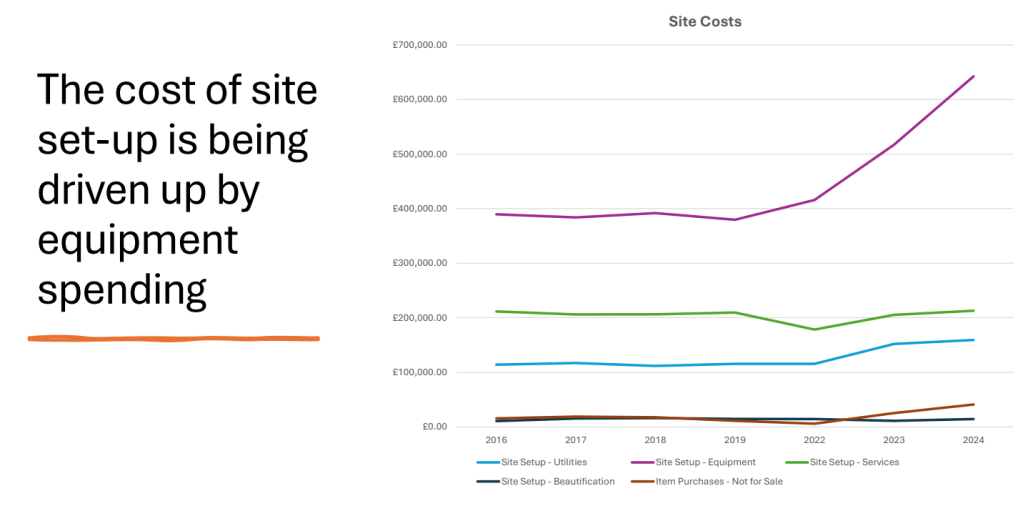
Cambridge City Council, which runs the annual folk music event, published a report that revealed the cost of hiring equipment increased by roughly 60% from 2016 to 2024. This represents an increase of around £250,000. The report concluded that it was a combination of particularly low ticket sales and huge costs which led to a provisional loss of £320,000.
Andrew Keightley is the Events Production Manager who hires the festival’s infrastructure from staging to toilets.
Speaking to Cambridge People, Andrew said the Council did not want to increase the cost of tickets to match the cost of running the festival as wages have not increased.
The Council must face increased costs unless the burden is lifted by commercial sponsors. For all the businesses based in Cambridge, the city is “sponsor tight”, Andrew explains.
Cambridge is host to some of the biggest names in the pharmaceutical sector with AstraZeneca’s main research and development centre based in the city. Last year, the company invested £200 million to expand AstraZeneca’s presence in Cambridge with the aim of employing an additional 1,000 people. Other companies like GSK ($30.3 billion revenue) and ARM ($4 billion) are based in Cambridge.

The huge cost of hiring equipment was due to the combined effect of Covid, Brexit and the Ukraine war. Factors included the rising material costs of wood and fuel as well as staff shortages.
“A lot of self-employed staff left the event industry during lockdown and have not returned. EU staff used to make up a lot of the larger construction teams they too have not returned. Finally, a chronic shortage of HGV truck drivers as so many were previously from the EU. Hence wages have increased exponentially”.
Although the shortage of HGV drivers has improved since Brexit, drivers can still charge a premium for their services.
The cost of talent has increased as well, with Mumford & Sons charging just £500 in 2010 to a staggering £250,000 when last approached by the festival. Artist prices are “a real problem”, Andrew says.

Although there are challenges ahead, Andrew is confident that the Folk Festival will come back stronger in 2026 and will not become one of the 75 festivals that have closed in the last two years.
 Cambridge People