Voting Labour will only help the Tories. It’s the Lib Dems punchline that won them 72 seats in the general election. Only Labour can stop the Tories. You’ve heard it all before. But when these are said at the same time, who should you trust?
Major inconsistencies in data on the tactical vote appear in a booklet sent to Cambridge residents ahead of the mayoral election on 1 May. Voters in Cambridgeshire and Peterborough received a booklet from the local government containing information on the candidates running for mayor.
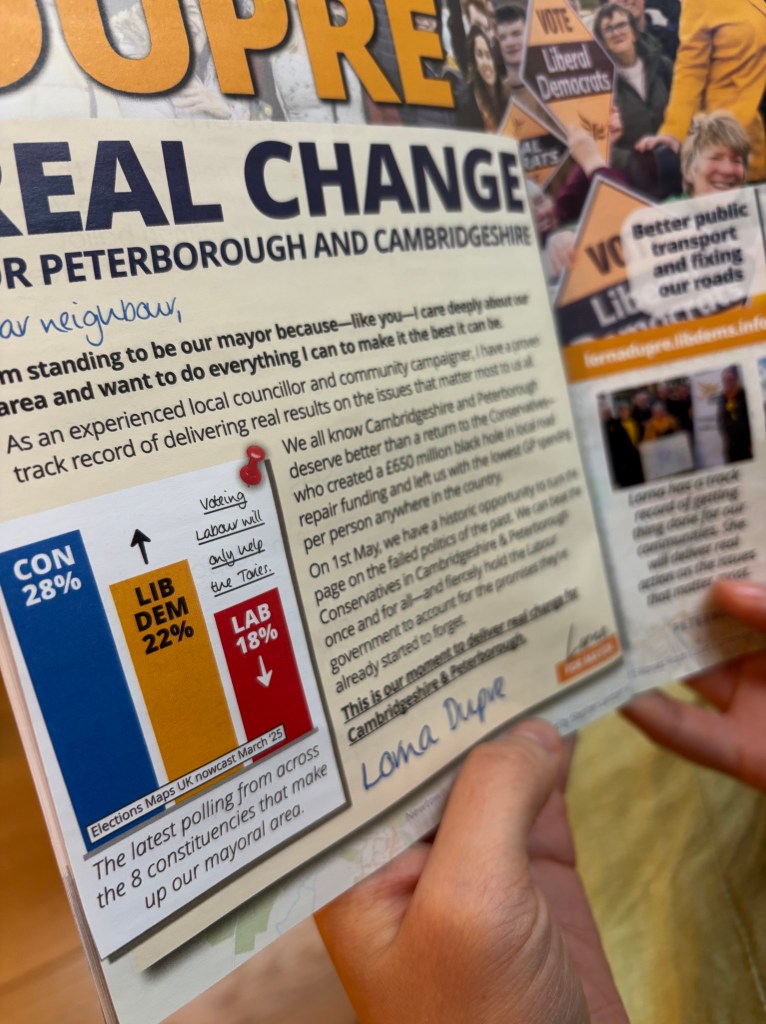
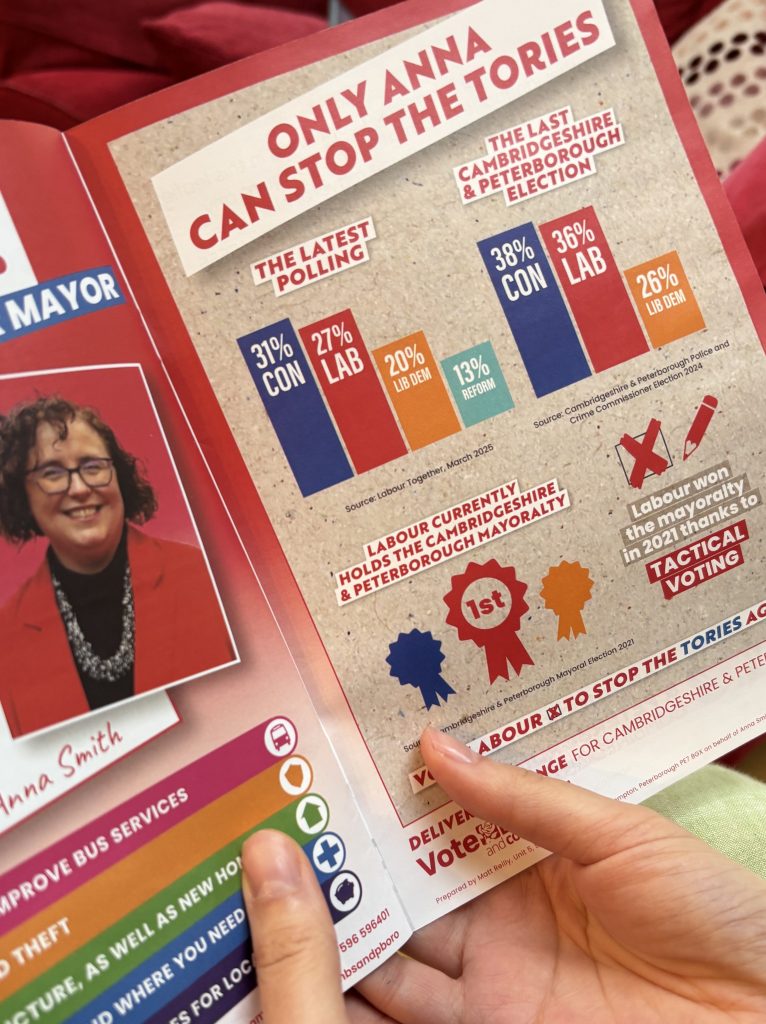
The Labour and Liberal Democrat candidates both claim they are the main rival to the leading Conservative candidate, Paul Bristow. Differing bar charts and polling data appear just pages apart.
Richard, a retired nurse from South Cambridge, said “There’s a time and a place for tactical voting. That time was the general election.” He said that voters should “do their own research” rather than rely on the polls.
Sue, who used to work for the council, said she “did not understand” the bar charts in the booklet. She added, “I’ve never been asked to contribute to a poll so I don’t know where they get their figures from.”
Contradictory messages on the tactical vote risk defeating both parties by splitting the vote more.
Dr Tom Nicholls, lecturer in data science and political communication at the University of Liverpool, says that tactical voting is made harder when both Labour and Liberal Democrats argue for second place.

“Of course, the parties have interests beyond helping tactical voters. Ideally they’d each like to be in a strong second place so that next time they are the obvious tactical choice.”
Dr Nicholls says that tactical voters should not rely on polls but make a decision based on the last election results. The last mayoralty in the area was won by Labour candidate Nik Johnson in 2021.
The candidate for the Liberal Democrats, Lorna Dupre, said to Cambridge Dispatch: “The polls are showing no great love for Labour or the Conservatives.
“The Labour candidate stood as her Police & Crime Commissioner last year, just months before the General Election when the Conservatives were at their lowest ebb and Labour were riding high in the polls. She couldn’t even win that election then. And things haven’t got any better for Labour since.”
Lorna adds “And if you can’t trust the polls, check what the bookies have to say. They show the Liberal Democrats well ahead of Labour in the stakes for the mayoral contest.”

The current Labour mayor is Dr Nik Johnson. He leads the Cambridgeshire and Peterborough Combined Authority (CPCA) and oversees a £20 million annual budget devolved from government. The mayor also has devolved powers to spend up to £800 million on local housing, infrastructure and jobs.
The Liberal Democrat candidate, Lorna Dupre, uses data from Elections Maps UK with polling from the mayoral area, which says they have 22% of the vote compared with Labour’s 18%. The data suggests it puts them in a stronger position to compete with the Conservative’s 28% and the bar chart appears beside the statement “voting labour will only help the tories”.
Just a few pages later, Labour candidate Anna Smith uses data from Labour Together that give Labour 27% of the vote which is closer to the leading 31% conservative vote. Liberal Democrats make 20% of the vote. The page also includes data from the last election which was the Police and Crime Commissioner Election which saw Labour and Conservatives neck and neck.
| Labour | Liberal Democrat | |
| Figures | Conservative: 31% Labour: 27% Liberal Democrat: 20% | Conservative: 28% Liberal Democrat: 22% Labour: 18% |
| Source | Labour Together, March 2025. | Election Maps UK nowcast March 2025, using eight constituencies in the mayoral area. Link here. |
Residents can vote for the next mayor on Thursday 1 May.
 Cambridge People
Doesn’t make a difference if you’ve already decided to vote Green
LikeLiked by 1 person